Saturday, January 17, 2026

Predestination and Human Responsibility

SOURCE:  Attributed to J.I. Packer.  Looking for a source.  

KEYWORDS:  free-will, predestination, salvation, grace,  

Although this is not a quote, the illustration has been attributed to J. I. Packer.  The speaker says his pastor did not originate the illustration.  According to John Piper, Packer called this tension between God's sovereignty and human responsibility an "antinomy"—"an appearance of contradiction between conclusions which seem equally logical, reasonable or necessary".  This illustration certainly is of a similar character.  

My pastor once gave me a good illustration of free will and predestination:

You come to an arch inscribed with Christ's words: "Come to me all you who are weary and heavy laden, and I will give you rest."  You stand staring at it, consider, and walk through. On the other side, you can see that the arch has another inscription on the back: "In love he predestined us for adoption to himself as sons."

Don't turn from Christ for fear that you're "not predestined." Accept his invitation, knowing that if you do, it was because he loved you first.


Tuesday, January 13, 2026

Christmas Love

SOURCE:  L’Engle, Madeleine. Winter Song. New York: Vanguard Press, 1961.

KEYWORDS:  Sin, Incarnation, Broken, Healing, Survival, Resistance, Christmas, Jesus

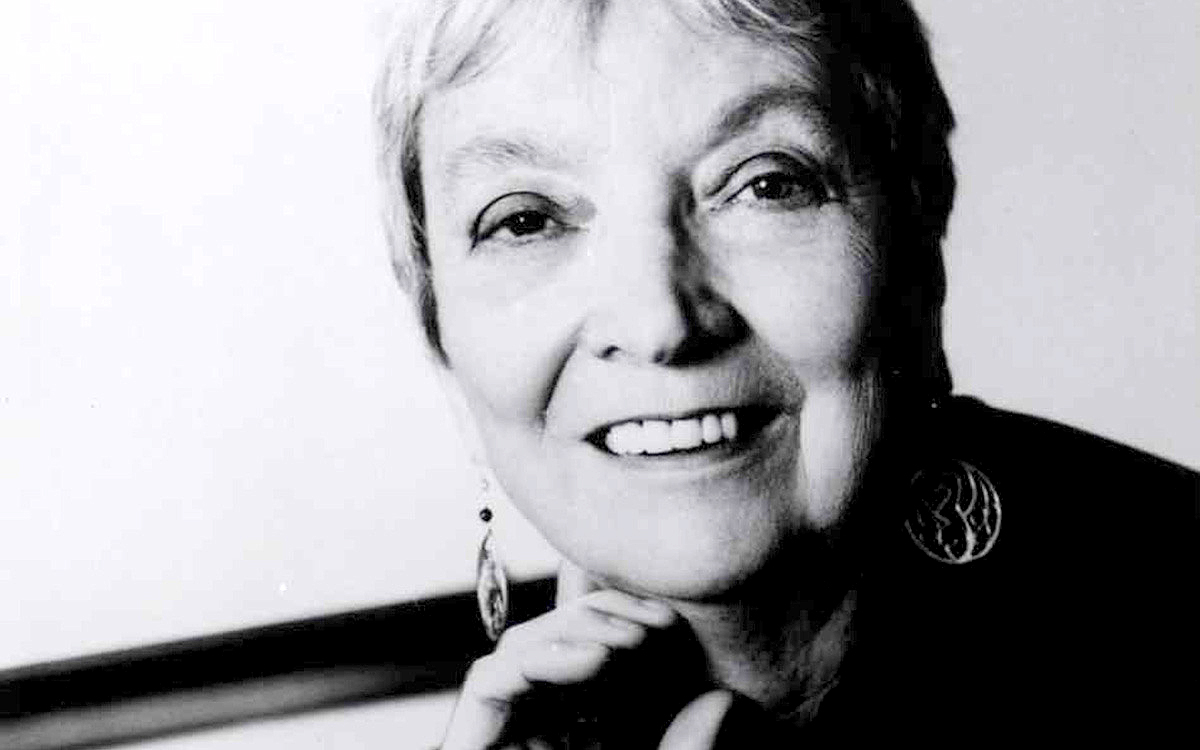
Winter Song is a collection of poems by Madeleine L'Engle that meditates on winter as a season of waiting, silence, and hard-won hope. The poems engage themes of faith, doubt, suffering, and incarnation with theological seriousness and emotional restraint.

The Maker’s hand flung stars across the night with angels bursting forth from galaxies, new music singing from the spheres in harmonies that blessed the dancing of the first-born light. 

And then the light was darkened by an earth dimmed by torn dreams, saddened by shrill pride. Stars faded, lost their story, and died. The dance distorted in strange lies and anger. Love’s hand again was lifted. In a manger again the Maker of the stars gave birth.

Friday, January 02, 2026

"Footsteps in the Sand" as a Limerick

Source:  Floating around the Internet

Keywords:  Grace, God, Forgiveness, Love, Footsteps


Just found this floating around the internet.  Taking famous poems and rewriting them as limericks.  As an appetizer, here is "The Raven" by Edgar Allen Poe reimagined as a limerick.  

The Raven

There once was a girl named Lenore
And a bird and a bust and a door
And a guy with depression
And a whole lot of questions
And the bird always says "Nevermore."

Now for the main event, "Footprints in the Sand." 


Footprints in the Sand

There was a man who, at low tide
Would walk with the Lord by his side
Jesus said "Now look back;
You'll see one set of tracks.
That's when you got a piggy-back ride."

The Original Poem, "Footprints in the Sand"
  • https://www.poetseers.org/the-great-poets/misc-2/footprints-in-the-sand/
  • https://en.wikipedia.org/wiki/Footprints_(poem)

Tuesday, December 09, 2025

Three Advent Poems by Madeleine L'Engle

SOURCE:  https://www.saltproject.org/progressive-christian-blog/2025/12/9/three-advent-poems-by-madeleine-lengle

KEYWORDS:  Jesus, baby, birth, Joseph, Mary, Wise, Shepherds, Incarnation, Christmas


 “After Annunciation”

This is the irrational season

When love blooms bright and wild.

Had Mary been filled with reason

There’d have been no room for the child.


“Like Every Newborn”

“The Lord is King, and has put on glorious apparel;

the Lord hath put on his apparel,

and girded himself with strength:” [Psalm 93]


Like every newborn, he has come from very far.

His eyes are closed against the brilliance of the star.

So glorious is he, he goes to this immoderate length

To show his love for us, discarding power and strength.

Girded for war, humility his mighty dress,

He moves into the battle wholly weaponless.


“The Risk of Birth, Christmas, 1973”

This is no time for a child to be born,

With the earth betrayed by war & hate

And a comet slashing the sky to warn

That time runs out & the sun burns late.


That was no time for a child to be born,

In a land in the crushing grip of Rome;

Honour & truth were trampled by scorn —

Yet here did the Saviour make his home.


When is the time for love to be born?

The inn is full on the planet earth,

And by a comet the sky is torn —

Yet Love still takes the risk of birth.

Saturday, November 29, 2025

My Pledge of Allegiance to Me

SOURCE:  http://www.tributetoblackwomen.com/poems/pledge.htm

KEYWORDS:  Creation, Identity, Child of God, Beauty, Quality


My Pledge of Allegiance to Me

Written by Letitia L. Hodge


There’s more to me than the human eye can see.

I’m a woman of purpose and destiny.


A perfect design, I’m special and unique.

I won’t be identified by the parts that make

up my physique.


My beauty is not defined by my skin or my hair

and my soul has more value than

 the clothes that I wear.


I’m not a symbol of pleasure or sex appeal;

I have the natural ability to comfort

and the power to heal.


When God made me, He created a gem

because He fashioned me in the likeness of Him.


I refuse to do anything that will put God to shame.

I deserve to be treated with reverence

and called by my name.


I can’t be purchased or sold at any price

because I’ve already been bought and paid

for by the precious blood of Christ!


I praise You because I am fearfully and

wonderfully made.

(Psalm 139:14)

Wednesday, September 03, 2025

Child of the Romans

SOURCE:            https://shec.ashp.cuny.edu/items/show/753

KEYWORDS:  humility, work, labor, rich, poor,


The poetry of Carl Sandburg often documented the lives of ordinary working people in his adopted city of Chicago. Here, he contrasts the backbreaking work and simple lunch of a railroad laborer with the comfortable lives and fine food enjoyed by the passengers on a first-class dining car rushing by. Despite the use of the pejorative term "dago" (an ethnic slur for Italians), the poem's title and Sandburg's sympathetic portrayal suggest a loftier lineage for the humble worker.


CHILD OF THE ROMANS

by Carl Sandburg

THE dago shovelman sits by the railroad track

Eating a noon meal of bread and bologna.

A train whirls by, and men and women at tables

Alive with red roses and yellow jonquils,

Eat steaks running with brown gravy,

Strawberries and cream, eclaires and coffee.

The dago shovelman finishes the dry bread and bologna,

Washes it down with a dipper from the water-boy,

And goes back to the second half of a ten-hour day's work

Keeping the road-bed so the roses and jonquils

Shake hardly at all in the cut glass vases

Standing slender on the tables in the dining cars.

Bread and Roses

SOURCE:  https://www.azlyrics.com/lyrics/judycollins/breadandroses.html

https://lauragraceweldon.com/2022/07/04/bread-roses/

KEYWORDS:  Strike, Union, Labor, Justice, Soul, Body, 

The slogan “Bread and Roses” originated in a poem of that name by James Oppenheim, published in American Magazine in December 1911, which attributed it to “the women in the West.”

It is commonly associated with the textile strike in Lawrence, Massachusetts during January to March 1912, now often known as the “Bread and Roses strike.” The strike, which united dozens of immigrant communities under the leadership of the Industrial Workers of the World, was led to a large extent by women.

As we go marching, marching in the beauty of the day

A million darkened kitchens, a thousand mill lofts gray

Are touched with all the radiance that a sudden sun discloses

For the people hear us singing: “Bread and roses! Bread and roses!”


As we come marching, marching, we battle too for men

For they are women's children, and we mother them again

Our lives shall not be sweated from birth until life closes

Hearts starve as well as bodies; give us bread, but give us roses!


As we go marching, marching, unnumbered women dead

Go crying through our singing their ancient song of bread

Small art and love and beauty their drudging spirits knew

Yes, it is bread we fight for - but we fight for roses, too!


As we come marching, marching, we bring the greater days

The rising of the women means the rising of the race

No more the drudge and idler — ten that toil where one reposes

But a sharing of life's glories: Bread and roses! Bread and roses!


Our lives shall not be sweated from birth until life closes

Hearts starve as well as bodies;

Bread and roses! Bread and roses!

Tuesday, August 19, 2025

The Running and Screaming

SOURCE:  Internet

KEYWORDS:  resurrection, resuscitation, Easter, Empty Tomb, living among the dead


My Comment:  Here is what makes resurrection so radical.  It's completely outside our worldview.  


Build Houses, Plant Gardens, and Wash Windows

SOURCE:  "Window Washer" by Agata Kus (Polish artist)
KEYWORDS:   Jeremiah 29:28, garden, resident aliens,


My comment:  I see this as heroic. People who do what needs to be done despite the overwhelming chaos
 

Friday, August 08, 2025

The Frameworks We Inherit

SOURCE:  https://www.theguardian.com/science/article/2024/aug/31/alexander-grothendieck-huawei-ai-artificial-intelligence

KEYWORDS:  paradigm, Kuhn, mathematics, science, epistemology, knowledge, culture, biblical, worldview,

In a famous passage from Harvests and Sowings, [Alexander] Grothendieck writes that most mathematicians work within a preconceived framework: “They are like the inheritors of a large and beautiful house all ready-built, with its living rooms and kitchens and workshops, and its kitchen utensils and tools for all and sundry, with which there is indeed everything to cook and tinker.” But he is part of a rarer breed: the builders, “whose instinctive vocation and joy is to construct new houses”.

Alexander Grothendieck was a mathematician.  Harvests and Sowings was his autobiography.  

https://en.wikipedia.org/wiki/Alexander_Grothendieck

The quote reminds me of Thomas Kuhn's The Structure of Scientific Revolution.